A, B, C and D describe more than light and dark
A shades are generally warmer, B shades brighter and more yellow, C shades more neutral or grey, and D shades reddish-grey. Matching adjacent teeth is especially important for a single crown.
Aesthetic guide
The right shade is not simply the whitest one. Brightness, warmth, translucency, neighbouring teeth and ceramic material all affect how a restoration looks within the full smile.
A real photograph of ceramic shade tabs from the VITA classical system. A1–D4 codes refer to physical reference shades, not online measurements. On-screen colours are not calibrated.
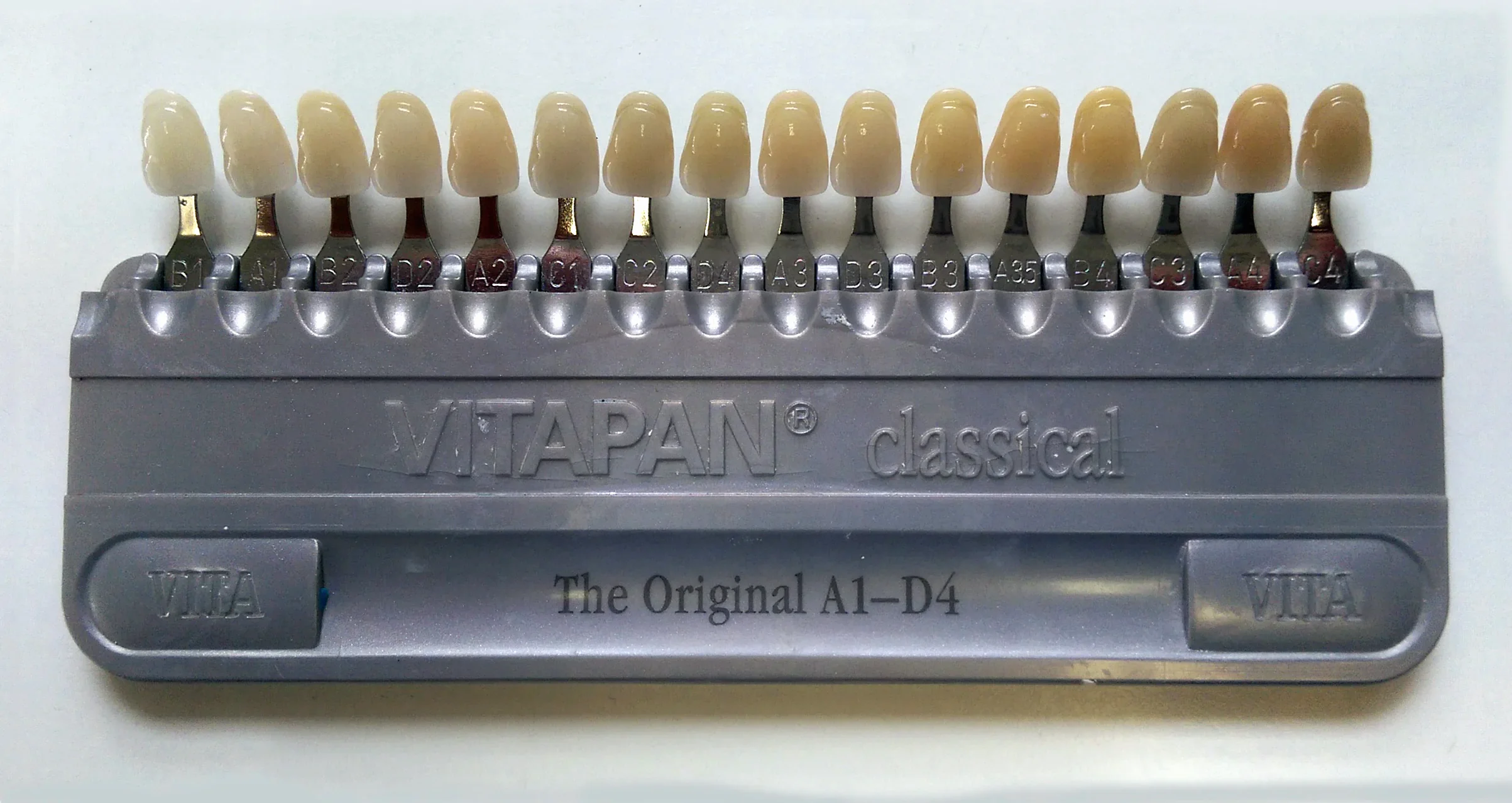
A shades are generally warmer, B shades brighter and more yellow, C shades more neutral or grey, and D shades reddish-grey. Matching adjacent teeth is especially important for a single crown.
A frontal smile, close-ups without filters and neutral daylight are useful. Yellow room light and aggressive phone editing can distort shade significantly.
With several veneers, brightness can be planned more freely. A single crown or implant crown needs much more precise matching to existing teeth.
No. B1 is bright, but the right choice depends on existing teeth, facial features, material and the desired level of naturalness.
Ceramic veneers and crowns do not respond to whitening like natural enamel, so target brightness should be discussed before final fabrication.
No. Photos help with pre-planning but do not replace clinical shade matching and laboratory communication.
Send clear photos and the shade direction you prefer. We structure the enquiry for review by the treating clinic.